
Qarnot raises $6.5 million for its computer servers that heat buildings

French startup Qarnot has raised a $6.5 million (€6 million) funding round. The company manufactures heaters and boilers with a special trick — they pack computers as computers tend to generate a lot of heat. Qarnot then lets companies leverage that computing power by running tasks on those unusual servers.

Banque des Territoires, Caisse des Dépôts, Engie Rassembleur d'Énergies, A/O PropTech and Groupe Casino are participating in today’s funding round.

When you design a data center, you transform electricity into computing resources and heat. Data centers always have to find clever new ways to get rid of heat with powerful cooling mechanisms.
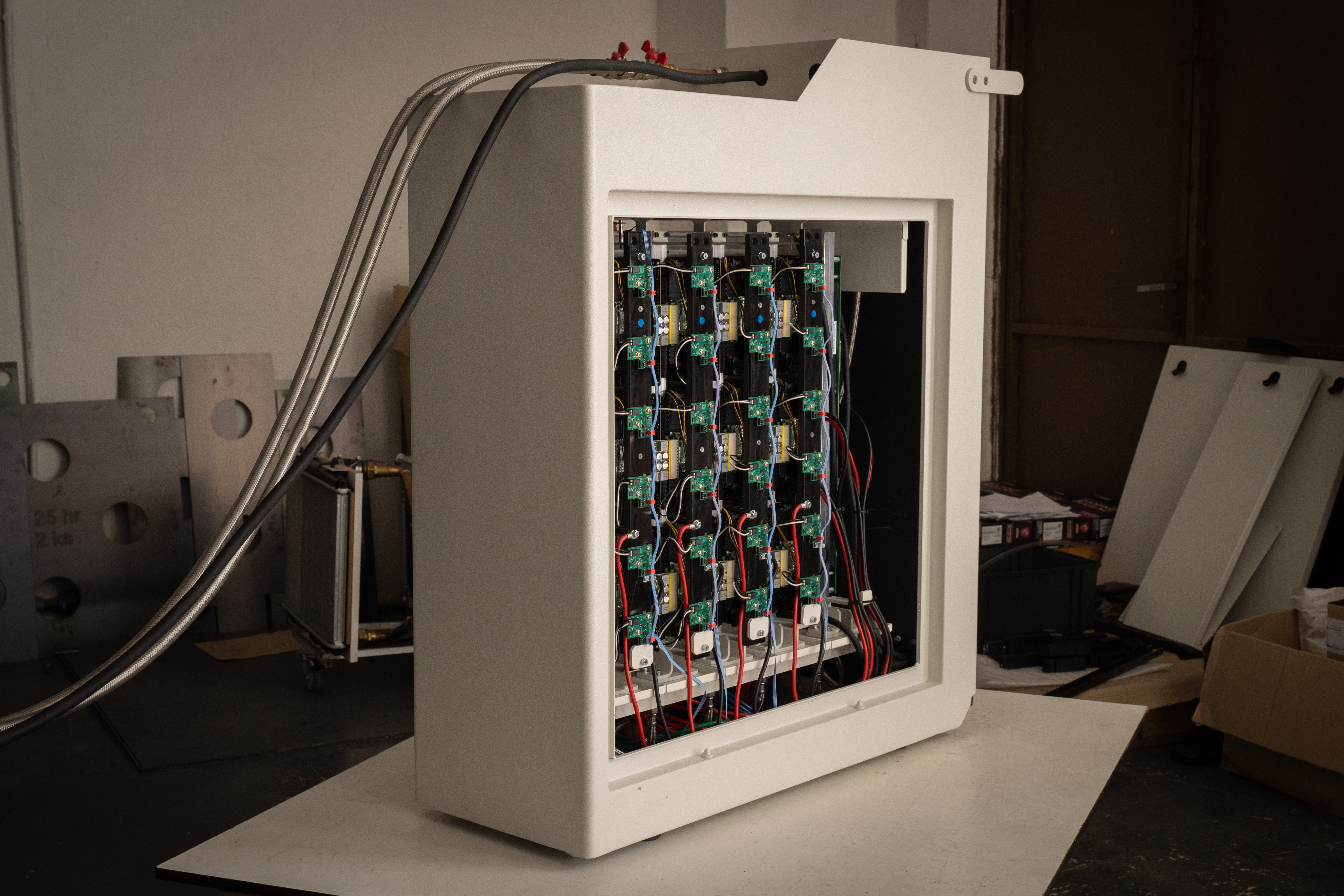
Qarnot is designing alternative data centers by taking advantage of heat instead of fighting heat. The company first started with computing heaters, an electrical heater with a server. The company sells those devices to construction companies looking for heaters for their new buildings.

People living or working in those buildings can then control heating directly on the heaters or through a mobile app. Nearly 1,000 social housing units are heated by Qarnot.

At the other end of the equation, companies such as BNP Paribas, Société Générale and Natixis rent those servers for their own needs. Illumination Mac Guff is also using the platform to generate 3D models for animated movies.

Heating suffers from seasonality. That’s why Qarnot has also designed scalable boiler systems. Those boilers pack CPU servers or a mix of CPU and GPU servers. Qarnot has also set up a joint venture with Groupe Casino to heat warehouses with computer racks.


from TechCrunch https://ift.tt/2xB94pw
via Technology

Comments

Popular posts from this blog

The Nintendo Switch has been the US’s bestselling console for 23 straight months

Photo by James Bareham / The Verge It’s been a good two years for the Nintendo Switch. According to Nintendo, the gaming tablet has been the bestselling console in the US for 23 straight months. And according to data from the NPD Group, it just had its best October ever, moving 735,926 units of both the Switch and Switch Lite in the US. The company says that represents a 136 percent increase compared to last year. To date, the Switch has sold 22.5 million units in the US, and last week Nintendo revealed that more than 68 million units have been sold globally . “We’re excited about our momentum,” says Nick Chavez, Nintendo of America’s SVP of sales and marketing. Chavez puts the company’s big October down to two main factors. One is a better supply of stock; this year in particular, it’s often been hard to find a Switch on store shelves. This has only been exacerbated by increased demand due to a combination of the pandemic and the breakout success of Animal Crossing: New Horizons . ...

Instagram accidentally reinstated Pornhub’s banned account

After years of on-and-off temporary suspensions, Instagram permanently banned Pornhub’s account in September. Then, for a short period of time this weekend, the account was reinstated. By Tuesday, it was permanently banned again. “This was done in error,” an Instagram spokesperson told TechCrunch. “As we’ve said previously, we permanently disabled this Instagram account for repeatedly violating our policies.” Instagram’s content guidelines prohibit  nudity and sexual solicitation . A Pornhub spokesperson told TechCrunch, though, that they believe the adult streaming platform’s account did not violate any guidelines. Instagram has not commented on the exact reasoning for the ban, or which policies the account violated. It’s worrying from a moderation perspective if a permanently banned Instagram account can accidentally get switched back on. Pornhub told TechCrunch that its account even received a notice from Instagram, stating that its ban had been a mistake (that message itse...

MVP versus EVP: Is it time to introduce ethics into the agile startup model?

Anand Rao Contributor Share on Twitter Anand Rao is global head of AI at PwC . The rocket ship trajectory of a startup is well known: Get an idea, build a team and slap together a minimum viable product (MVP) that you can get in front of users. However, today’s startups need to reconsider the MVP model as artificial intelligence (AI) and machine learning (ML) become ubiquitous in tech products and the market grows increasingly conscious of the ethical implications of AI augmenting or replacing humans in the decision-making process. An MVP allows you to collect critical feedback from your target market that then informs the minimum development required to launch a product — creating a powerful feedback loop that drives today’s customer-led business. This lean, agile model has been extremely successful over the past two decades — launching thousands of successful startups, some of which have grown into billion-dollar companies. However, building high-performing product...